











Why Thorough Facial Cleansing With Dedicated Skincare Products Is Essential
Facial cleansing is the foundation of any effective skincare routine, yet it remains one of the most underestimated steps. Many people assume that if there is no visible dirt on the skin, it must be clean. In reality, most impurities are invisible to the naked eye. Sebum, smog, sweat, bacteria and residual SPF accumulate on the skin throughout the day, leaving it burdened even when it appears perfectly “fine” on the surface.
Negative experiences with facial cleansing are also very common. Tightness, excessive dryness, irritation, burning sensations or breakouts often lead to the belief that “cleansing damages the skin”. In truth, the issue is rarely cleansing itself. The real problem lies in using inappropriately formulated products that disrupt the skin’s natural balance instead of supporting it.
Modern lifestyle plays a significant role as well. We live at a fast pace, and in the evening we often “cut corners” - skipping facial cleansing altogether or reducing it to the absolute minimum due to exhaustion. This happens because the consequences are not immediately visible. However, the skin remembers. Neglect accumulates, and its effects only become apparent over time, showing up as clogged pores, irritation and a visible decline in skin quality.
What many people do not realise is that improper facial hygiene is directly linked to accelerated skin ageing.
Insufficient cleansing with well-chosen skincare products leads to micro-damage and low-grade micro-inflammation. These subtle, often invisible inflammatory reactions weaken the skin barrier and compromise its protective function. When such inflammation becomes chronic, it significantly accelerates the ageing process. The skin becomes more vulnerable and loses its natural resistance to external aggressors such as free radicals - highly reactive molecules originating from environmental pollution. This cascade triggers collagen degradation, loss of elasticity and a noticeable deterioration in overall skin condition.
This is not a coincidence. There is a clear and direct connection between thorough, daily and effective facial cleansing and the maintenance of youthful, healthy-looking skin.
Proper facial cleansing is not merely an aesthetic concern. It is one of the most important pillars of anti-ageing prevention, as it helps limit chronic micro-inflammatory processes that drive premature skin ageing.
Is Water Alone Enough for Facial Cleansing?
Throughout the day, everything the skin comes into contact with settles on the face: sebum produced by the sebaceous glands, sweat, dust, urban smog, bacteria, as well as residues of make-up and SPF products. This creates a complex build-up that weighs the skin down and irritates it for many hours.
Water alone is not capable of removing this. It does not dissolve oils, and therefore cannot effectively cleanse the skin of sebum, make-up or sunscreen, all of which are formulated to adhere firmly to the skin’s surface. As a result, the face may appear “clean”, while in reality it remains insufficiently cleansed - a direct pathway to micro-inflammation, clogged pores and accelerated skin ageing.
Washing the face with water alone is not skincare. It is a daily act of neglect that, under the guise of “natural care”, gradually weakens the skin’s protective barrier, fuels chronic inflammation and accelerates the ageing process - even if the damage is not immediately visible.
“Water and Soap” as the Original Skincare Routine - And How It Contributed to Premature Skin Ageing
For decades, well into the mid-20th century, dermatologists and cosmetologists recommended washing the face using only water and traditional soap, considering it the purest and most hygienic approach to facial cleansing. At the time, this method was seen as the foundation of a healthy skincare routine. However, clinical observations and early dermatological studies revealed a very different outcome. Women who relied on water and soap alone more frequently experienced chronic skin dryness, increased sensitivity, disruption of the skin barrier, premature wrinkles and a visible loss of skin elasticity.
As scientific research into skin physiology evolved, greater attention was given to skin pH balance, the hydrolipid barrier and the skin microbiome. This research clearly demonstrated that the problem was not the lack of skincare products, but the use of harsh cleansing methods that stripped the skin of its natural protective lipids. Traditional soap, with its alkaline pH, was shown to significantly disrupt the skin’s natural acid mantle, weakening the skin barrier and increasing vulnerability to external aggressors.
Paradoxically, what was once promoted as the healthiest form of facial cleansing was, in reality, accelerating the processes of premature skin ageing. Over time, aggressive cleansing compromised the skin’s ability to retain moisture, defend itself against environmental stressors and maintain a youthful, resilient appearance. This historical example highlights why modern skincare places such strong emphasis on gentle facial cleansers, balanced pH levels and barrier-supporting formulations as essential elements of an effective, anti-ageing skincare routine.
Are Gel and Foam Cleansers Enough to Remove Make-up?
The short answer is no. Gel and foam cleansers are primarily designed to cleanse the skin, not to effectively remove full make-up. Their main function within a skincare routine is to remove sweat, excess sebum and daily surface impurities - not to dissolve colour cosmetics or remove UV filters and long-wear formulations.
Make-up products, particularly foundations, mascaras and SPF products, contain oils, silicones, pigments and water-resistant ingredients specifically formulated to adhere to the skin. Gentle gel and foam facial cleansers are not capable of fully dissolving these substances. As a result, make-up is often spread across the skin rather than properly removed, leaving residues trapped on the skin’s surface and deep within the pores.
Incomplete make-up removal is not a minor oversight - it is a form of daily skin sabotage. Over time, pores become progressively clogged, low-grade micro-inflammation intensifies and the complexion loses its clarity, appearing dull, grey and fatigued. Skin regeneration processes are disrupted, leading to accelerated skin ageing. This type of damage cannot be corrected with even the most advanced skincare products applied to inadequately cleansed skin.
This is why relying solely on gel or foam cleansers for make-up removal compromises the skin barrier and undermines the effectiveness of any anti-ageing skincare routine. Proper cleansing is not optional - it is the foundation of healthy, resilient and youthful-looking skin.
https://www.natashacosmetics.co.uk/skincare/face/cleansers?product_id=10818
Is It Worth Using Specialist Products to Remove Mascara?
Absolutely - especially if you care about the health of the delicate eye area and want to prevent lash damage. Mascara, particularly waterproof mascara, contains long-lasting ingredients, pigments and polymers designed to adhere to the lashes throughout the day. The very properties that ensure long-wear performance also make mascara extremely difficult to remove using standard gel or foam facial cleansers.
Regular facial cleansers are effective at removing sweat, excess sebum and surface impurities, but they are not formulated to dissolve mascara or release it gently from the lashes. As a result, attempting to remove eye make-up with facial cleansers alone often leads to excessive rubbing, which can cause lash breakage or lash loss, irritation and redness of the eyelids, as well as leftover mascara residue along the lash line.
Using a dedicated eye make-up remover allows mascara to be dissolved efficiently and removed without mechanical stress. This protects the lashes, preserves the integrity of the delicate skin around the eyes and prevents inflammation that can compromise the eye area over time. In a well-designed skincare routine, specialist mascara removal is not an optional extra - it is a fundamental step in maintaining healthy lashes and youthful-looking skin around the eyes.
Why Are Oil Cleansers More Effective at Removing Make-up?
Oil cleansers are more effective because they rely on a simple and proven principle of chemistry: like dissolves like. Make-up, SPF products and sebum all have a lipophilic structure, meaning they dissolve easily when they come into contact with oil. Instead of being mechanically rubbed off the skin, make-up breaks down effortlessly and lifts away from the surface. As a result, make-up quite literally “melts off” the face - without friction, without irritation and without causing micro-damage to the skin.
In addition, oil cleansers are able to penetrate deeper into the pores, where residual cosmetics, sunscreen and excess sebum tend to accumulate. Gel and foam cleansers often fail to reach these deposits. By effectively dissolving them, oil cleansing helps reduce low-grade inflammation and lowers the risk of clogged pores. Importantly, oil-based cleansers work gently: they do not disrupt the hydrolipid barrier, do not strip the skin of moisture and do not trigger defensive stress responses within the skin.
This is precisely why oil cleansing is considered the most effective first step of facial cleansing. It removes what truly burdens the skin, rather than merely creating the illusion of cleanliness. If make-up is to be removed completely and the skin is to remain calm, resilient and balanced, oil cleansing is the clear winner.
Long before modern cleansing oils became popular, women in Japan removed make-up using rice oil, followed by gentle cleansing with botanical infusions. For many years, Western skincare regarded this method as “too oily”, until dermatological research confirmed that oil dissolves oil - exactly the principle behind today’s highly effective double cleansing method.
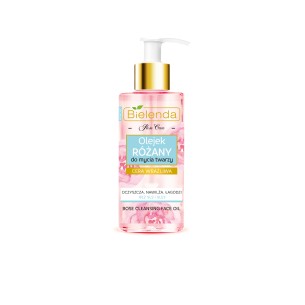
https://www.natashacosmetics.co.uk/skincare/face/cleansers/rose-care-rose-cleansing-oil-140-ml
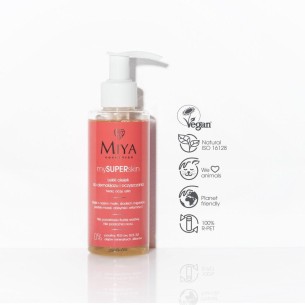
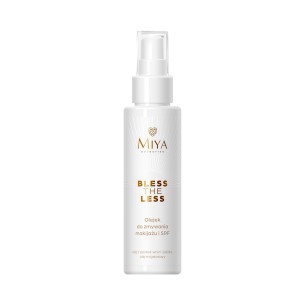
https://www.natashacosmetics.co.uk/skincare/face/cleansers/-miya-cosmetics-light-oil-for-removing-makeup-and-cleansing-the-face-eyes-and-mouth-140ml
https://www.natashacosmetics.co.uk/Miya?product_id=10819
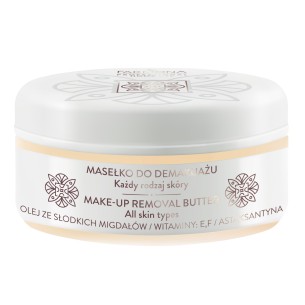
https://www.natashacosmetics.co.uk/farmona-professional-home-care-make-up-removal-butter-150ml
Double Cleansing Is the Most Effective Method of Facial Cleansing
Double cleansing is the most effective - and the only truly sensible - way to cleanse the face thoroughly. The first step, using an oil cleanser, cleansing balm, milk or the increasingly popular cleansing butter, dissolves make-up and SPF products without friction or micro-damage, rather than aggressively rubbing them off the skin. The second step, a gel or foam cleanser, removes any remaining residue and restores the skin’s sense of cleanliness and physiological balance.
This approach ensures that the skin is genuinely cleansed, not merely “rinsed”. For this reason, double cleansing is not a skincare trend, but the foundation of conscious skincare and a crucial element in protecting the skin from irritation and premature ageing.
Skipping double cleansing is a deliberate acceptance of inadequate cleansing, chronic inflammation and accelerated skin ageing - regardless of how expensive the cream applied afterwards may be.
Skincare Facts Worth Knowing
1. Regular cleansing improves the skin microbiome and hydration Research shows that a consistent facial cleansing and moisturising routine can increase the diversity of the skin microbiome and improve skin hydration levels. This directly supports the condition and resilience of the skin barrier, which is essential for healthy, balanced and youthful-looking skin.
2. Gentle cleansing is essential for acne-prone skin Dermatological literature emphasises that the goal of cleansing acne-prone skin is to gently remove dirt, sweat and excess sebum without over-drying or irritating the skin. Aggressive scrubbing and harsh cleansers can disrupt the skin barrier and often worsen acne rather than improve it.
3. Overly strong cleansers can damage the skin barrier Dermatological studies show that harsh surfactants found in unsuitable cleansing products can damage skin proteins and lipids. This leads to tightness, dryness, irritation and disruption of the hydrolipid barrier - exactly the opposite of what effective skincare aims to achieve.
4. Skin pH truly matters The skin has a naturally slightly acidic pH, typically between 4.5 and 5.5, which helps protect both the skin microbiome and the skin barrier. Inappropriate cleansing products can disturb this balance. Research suggests that formulations with a pH close to the skin’s physiological level help the skin return to equilibrium more quickly after cleansing and significantly reduce irritation.
5. The skin can “learn” to overreact Dermatologists have observed that individuals who cleansed their skin aggressively for many years often developed skin that reacted with stinging or burning sensations even when exposed to water alone. This is not because their skin was naturally sensitive, but because the protective barrier had been chronically damaged by improper cleansing. It is one of the most ironic consequences of poor skincare hygiene.
Summary
Thorough facial cleansing is not an optional addition to skincare, nor a step reserved for the especially diligent. It is the foundation of healthy skin, directly influencing its resilience, regenerative capacity and the pace of skin ageing. Insufficiently cleansed skin remains in a state of constant overload and low-grade inflammation - a condition that no serum or cream can compensate for. Daily, conscious cleansing - ideally through double cleansing - removes the true sources of skin imbalance rather than merely masking their effects. If the skin is to look youthful, calm and healthy, everything begins here: with proper cleansing.

-220x122h.jpg "Neboa Hydration & Smoothness - Because Soft Hair Starts with Hydration")


-220x122h.jpg "Valentine’s Beauty Love Story - Self-Love, Skincare & Self-Care")


Leave a Comment