








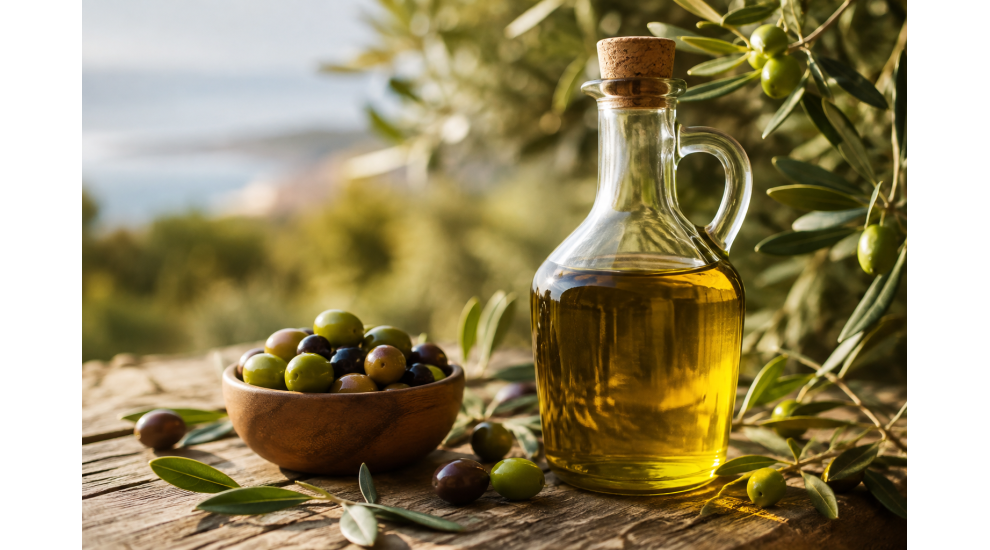
Olive oil has become a kitchen essential. Once associated mainly with Mediterranean cooking, it is now found in almost every supermarket and is increasingly chosen by people looking for healthier, better-quality foods.
Terms such as Extra Virgin Olive Oil (EVOO), early harvest and high-polyphenol olive oil are becoming increasingly familiar.
But there is a problem.
Not every bottle labelled “Extra Virgin Olive Oil” offers the same quality, nutritional profile or level of naturally occurring beneficial compounds.
The differences between olive oils can be surprisingly large.
And with shelves full of attractive bottles at dramatically different prices, how can you tell whether you are buying genuinely high-quality olive oil - or simply paying for clever packaging?
Why Has Extra Virgin Olive Oil Become So Popular?
Much of olive oil’s reputation comes from the Mediterranean diet, where it has traditionally been the principal source of added fat.
As interest in Mediterranean eating has grown, so has our understanding of olive oil itself.
Today, consumers are beginning to look beyond flavour. We hear more about olive varieties, early harvesting, acidity, oxidation and, perhaps most importantly, polyphenols.
This has even created growing interest in a specialist category:
high-polyphenol extra virgin olive oil.
And this is where the differences between one bottle and another become particularly interesting.
“Extra Virgin” Doesn’t Mean Every Olive Oil Is Equal
Extra Virgin Olive Oil - EVOO is a legally defined category, not simply a marketing expression.
To qualify as extra virgin under European standards, an olive oil has to meet specific chemical and sensory requirements.
For example, its free acidity must not exceed 0.8%, while its peroxide value must not exceed 20 meq O₂/kg.
But this is where consumers can easily misunderstand the label.
Meeting the requirements for Extra Virgin Olive Oil does not mean that every EVOO is of identical quality.
One olive oil may sit relatively close to the permitted limits.
Another may achieve results dramatically below them while also containing significantly higher levels of naturally occurring polyphenols.
The words “Extra Virgin” are therefore a useful starting point - but they don’t tell you the whole story.
Olive Oil and the Problem of Food Fraud
There is another reason why it pays to understand what you are buying.
Because genuine high-quality olive oil is a valuable agricultural product, the olive oil sector has long faced issues surrounding adulteration, mislabelling and authenticity.
Food fraud does not necessarily mean that a bottle contains no olive oil at all.
Problems can include lower-grade oils being presented as higher-quality products, incorrect declarations of origin, blending or a product being marketed as extra virgin despite failing to meet all the required characteristics of that category.
This is one of the reasons why olive oil is subject to detailed standards covering both quality and purity.
For consumers, there is a simple lesson:
don’t judge olive oil by price, packaging or the words “Extra Virgin” alone.
Look a little deeper.
What Are You Actually Getting for Your Money?
Price alone never guarantees quality.
But producing genuinely high-quality extra virgin olive oil is expensive.
Olives may be harvested earlier, when oil yields are lower. Fruit needs to be handled carefully and transported quickly. Processing conditions must be controlled. Storage matters. Laboratory analysis costs money.
All of this affects the final price.
So rather than simply asking:
“Which olive oil is cheapest?”
a better question might be:
“What am I actually getting for this price?”
Here are some of the things worth looking for.
1. Look for Polyphenol Content
Polyphenols are naturally occurring plant compounds found in olives and good-quality extra virgin olive oil.
Their concentration can vary considerably depending on factors including olive variety, ripeness, harvesting time, processing and storage.
Importantly:
“Extra Virgin” does not automatically mean “high in polyphenols”.
That’s why these two statements tell you very different things:
Extra Virgin Olive Oil
and
820 mg/L polyphenols
The first tells you the category of the oil.
The second gives you a measurable characteristic of that particular olive oil.
Olive oil polyphenols are especially interesting because they contribute to the protection of blood lipids from oxidative stress, provided the required level of hydroxytyrosol and its derivatives is consumed.
So if polyphenols are one of the reasons you are choosing EVOO, look for a producer who actually tells you how much the oil contains.
2. Check the Acidity
For Extra Virgin Olive Oil, free acidity cannot exceed 0.8%.
Premium olive oils can achieve figures considerably below this threshold.
Low free acidity can be an indicator of good fruit quality and careful handling of olives before processing.
However, acidity should never be considered in isolation.
Think of it as one part of the olive oil quality puzzle.
3. Look at the Peroxide Value
This is a number many consumers have never heard of, yet it can tell us something useful about olive oil quality.
The peroxide value is an indicator of primary oxidation.
For Extra Virgin Olive Oil, the European maximum is 20 meq O₂/kg.
A producer willing to disclose a very low peroxide value is therefore giving you another measurable piece of information about the condition of the oil.
And this brings us to an important point.
When choosing premium olive oil, numbers can be far more informative than words such as “luxury”, “superior” or “premium”.
4. Find Out Where the Olives Come From
Compare these two descriptions:
“Olive oil of EU origin.”
and
“Produced in Laconia, Greece, from Koroneiki and Athinolia olives.”
The second immediately tells you considerably more about what you are buying.
For premium olive oils, traceable provenance matters.
Look for a clearly identified country and, ideally, region of production. Information about olive varieties is another positive sign.
Protected geographical designations such as PGI - Protected Geographical Indication can provide additional information about the product’s relationship with a particular geographical area.
5. Look for Early-Harvest Olive Oil
You may increasingly see the words “early harvest” on premium olive oils.
This means the olives are harvested before reaching full maturity.
There is a trade-off.
Earlier olives generally produce less oil, making production less efficient and more expensive.
However, early harvesting is highly valued in premium EVOO production and can contribute to the distinctive sensory profile and high phenolic content associated with certain oils.
So when an early-harvest olive oil costs more, there may be a genuine agricultural reason behind the price difference.
6. How Quickly Were the Olives Processed?
Olives are fruit.
Once harvested, natural processes begin that can affect the quality of the resulting oil.
This is why premium producers aim to keep the time between harvesting and processing as short as possible.
When a producer tells you that olives are mechanically processed within just a few hours of harvesting, that information matters.
Good olive oil starts long before the oil reaches the bottle.
7. Look for Evidence, Not Just Marketing
Premium.
Traditional.
Mediterranean.
Superior Quality.
Natural.
They all sound appealing.
But compare them with:
How many polyphenols does it contain? What is its acidity?
What is the peroxide value?
Where exactly were the olives grown?
Which olive varieties were used?
Has the oil been laboratory tested?
Those questions tell us considerably more about the actual product.
A Real Example: LoveLife Pure Origin
Now let’s apply these criteria to an actual Extra Virgin Olive Oil.
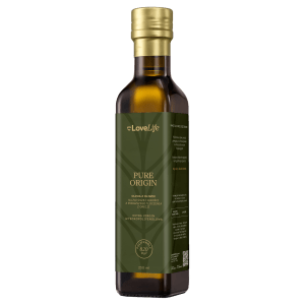
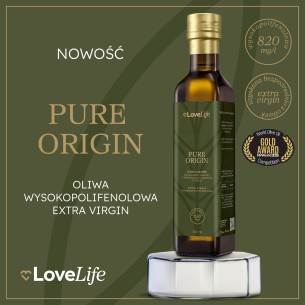
LoveLife Pure Origin comes from Laconia in Greece and is produced from Koroneiki and Athinolia olives.
Its measured and declared characteristics include: 820 mg/L polyphenols
895.1 mg/kg total polyphenols
77% oleic acid
30 mg vitamin E per 100ml
0.47% free acidity
2.3 meq O₂/kg peroxide value
These numbers become much more meaningful once we know what to look for.
The maximum free acidity permitted for EVOO is 0.8%. Pure Origin records 0.47%.
The maximum peroxide value is 20 meq O₂/kg. Pure Origin records just 2.3.
And then there is its particularly high declared polyphenol content of 820 mg/L.
The olives are harvested early in the season and mechanically processed within hours of picking.
This is a good example of why looking beyond the front label can reveal much more about the quality of an olive oil.
Good Olive Oil Can Taste Bitter and Peppery - That’s Not Necessarily a Bad Thing
Have you ever tasted an expensive olive oil and wondered:
“Why is it bitter?”
Or noticed a slightly peppery sensation at the back of your throat?
You may instinctively think something is wrong.
Not necessarily.
Bitterness and pungency are recognised sensory characteristics of olive oil and can be particularly noticeable in fresh oils rich in phenolic compounds.
A high-quality EVOO doesn’t always taste mild or neutral.
That distinctive peppery kick can actually be part of its character.
Don’t Buy Olive Oil with Your Eyes Alone
A beautiful dark bottle.
Olive branches on the label.
Words such as “Greek”, “Italian”, “Mediterranean”, “Traditional” or “Premium”.
They can all make a product look wonderful.
But they don’t necessarily tell you what is actually inside the bottle.
If you’re choosing Extra Virgin Olive Oil because you value its quality and naturally occurring compounds, start thinking about olive oil in much the same way you might think about good wine.
Provenance matters. Variety matters. Harvesting matters. Processing matters. Freshness matters. And measurable quality parameters matter.
Price can be part of the equation, but the most expensive bottle is not automatically the best.
One of the most useful indicators is simply transparency.
How much is the producer prepared to tell you about their olive oil?
How to Choose a Good Extra Virgin Olive Oil
Next time you’re shopping for EVOO, check these seven things:
1. Is it genuinely Extra Virgin Olive Oil?
2. Does it have a clearly identified origin?
3. Are the olive varieties specified?
4. Is it early harvested?
5. Does the producer disclose its polyphenol content?
6. Are quality parameters such as acidity or peroxide value available?
7. Is the quality supported by testing rather than marketing claims alone?
A good olive oil doesn’t necessarily have to display every one of these details on its front label.
But the more you know about what’s inside the bottle, the less you have to rely on marketing promises.
Because when it comes to olive oil, “Extra Virgin” is only the beginning of the story. What separates an ordinary EVOO from an exceptional one can often be found in the numbers.
-220x122h.jpg "Neboa Hydration & Smoothness - Because Soft Hair Starts with Hydration")
-220x122h.jpg "Valentine’s Beauty Love Story - Self-Love, Skincare & Self-Care")

Leave a Comment